A collaborative project by
Katleen Vermeir &
Ronny Heiremans
bolwerK is a non-exclusive, temporary constellation that has initiated, curated, mediated and facilitated diverse projects locally and internationally since 1998. Her ‘open’ network is the basis for collaboration and the triggering of internal and external group dynamics around relevant social issues. bolwerK considers art the ideal context for producing thought and reflection upon society. Art creates a meta-layer, a framing of perception in which social, economic and political issues, norms, and values can be questioned. Art should not induce individuals to produce authenticity and create personal history, but encourage multitudes to create collective awareness. Creating containers of interchange enables people to share, reflect and express ideology, knowledge, myth and practice; to feed the idea of communality. Once a social framework is established, it doesn’t exist to streamline ideas, but to create common questions. The development of a toolkit to externalize these questions empowers the group or individual.
HAP is an art collective set up in 1999 by visual artists Jens De Schutter, Piet Mertens and Wim Waelput. HAP is fighting and criticizing imposed order or forms and general opinions. They obtain this by thoroughly elaborating systemised mise-en-scène and strategies (economy, sports, art, youth culture, war, space travel) in monumental and project-like installations or performances. This appropriation of mise-en-scène and strategies is realised with close at hand materials such as wood, cardboard, tape, plastic foil, ... in fresh and bright colours, creating a staggering space for launching new propositions and (re) presentations. Of great importance in HAP's play with imitation versus reality, is its artistic concern with the relationship between producing and manufacturing on the one hand and on the other hand the meaning these acts are generating with respect to the result, the art product.
Nav Haq
Vincent Meessen studied journalism and cultural policy. Most of his work is collaborative. Meessen usually establishes delegation protocols so that the work is always and already the result of an encounter. He mainly produces 'documents of experience' in which he uses and corrupts documentary style. His work develops around the idea of 'disputed spaces' - territory as a political issue in the postcolonial context. Besides his personal work, he has initiated various collaborative projects such as Potential Estate (2006-2009), UTIL (2002- ...), Qui-vive (2003-2004) and was an active member of Universal Embassy (2001-2005). He has also curated programs for e-flux (NYC), BAK (Utrecht), Argos center for art & media, Cinema Museum, Recyclart (Brussels) and Extra City (Antwerp). His video works are distributed by Argos. In 2006, he received three awards; best Belgian short in the Courtisane Film Festival (Ghent), First Prize International Competition at the 52nd International Short Film Festival of Oberhausen and Best International Documentary, Entrevues Festival (Belfort). He is currently a guest lecturer at ENSAV, LaCambre (Brussels) and lives in Brussels.
Christodoulous Panayiotou trained in dance and performing arts in Lyon and in London. His finely tuned videos and sculptural installations are the result of carefully orchestrated yet ephemeral situations, generally involving the collaboration of others. He is especially interested in what he describes as “the amorous dialectic” – the contradictions of love and its associations with romantic myth and sentimentality. In 2005 Panayiotou was awarded the 4th DESTE Prize by the DESTE Foundation for Contemporary Art, Athens, Greece. PiST/// is an alternative project space that is willing to supply possibility of presentations from young and emerging artists, artists who work in an experimental attitude, writers, critics and curators. PiST as a non-profit organization, is aiming to create a different dynamic to the art scene of Istanbul and Turkey. It is located on 3 neighbouring store-front shops in Pangalti, Istanbul since May 2006. PiST is an independent project of its own that is run by Didem Ozbek and Osman Bozkurt.
Potential Estate is a collaborative practice with an experimental approach on the issue of residency. As a temporary collective it operates along models of self-organization and participation. It applies forms of open production, oppositional practices and alternative economies. These themes and their intersections are highlighted in the different ways of presenting the outcome of its activities, mainly multiple cabinets and a website,… A future ‘residential’ is the key issue around which Potential Estate is conceived. This will take place in summer 2008. After an exploratory mission, Belgium, a small suburban entity in Wisconsin, U.S. – founded by their Belgian and Luxemburg ancestors – was identified as a possible ‘residential’ site.
Marko Stamenkovic is an historian, critic and curator. He lives and works in Belgrade and Amsterdam, where he is participating at the De Appel Curatorial Program since September 2007. He has been curating projects and exhibitions in Serbia and abroad. His writings on contemporary art have been published internationally. Stamenkovics research interests range from interdisciplinary analyses of contemporary visual arts and curatorial studies to institutional cultural organization, art management, and political, social and economic aspects of aesthetic discourses.
Peter Swinnen is one of the founding architects of 51N4E in Brussels, together with Freek Persyn and Johan Anrys. Swinnen studied at St Luke's Higher Institute in Brussels and at the Architectural Association in London. He worked at T.O.P. office in Antwerp, Foreign Office Architects in London and for the architect Christian Kieckens in Brussels. In 2003 51N4E won both the Architectuurprijs Woningbouw (Architectural Prize for Housing) from the Province of Flemish Brabant and the Maaskant Prize for young architects, in Rotterdam.
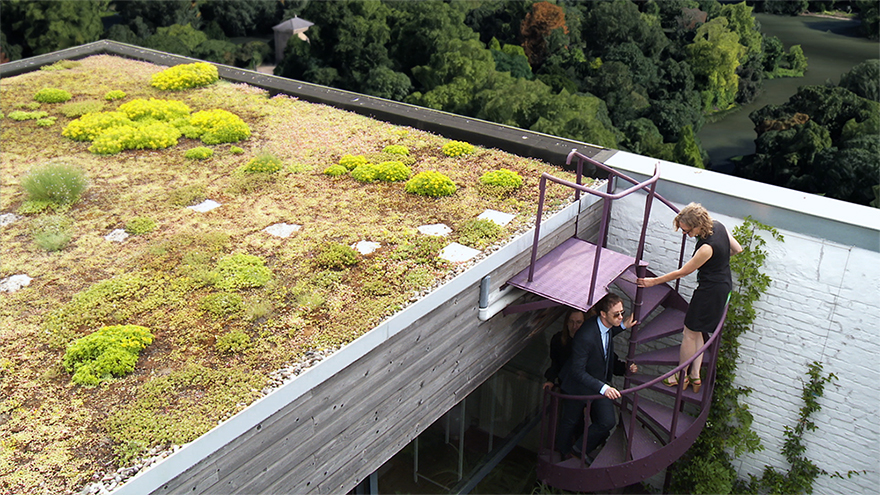
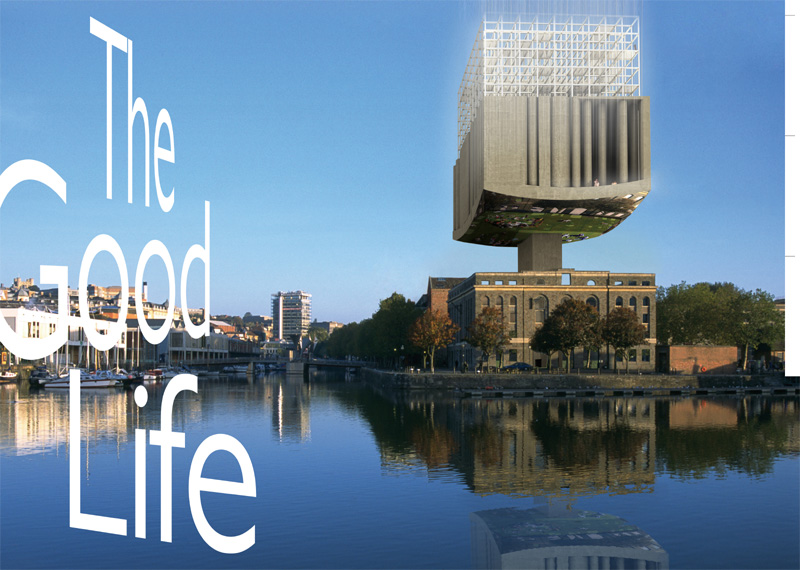
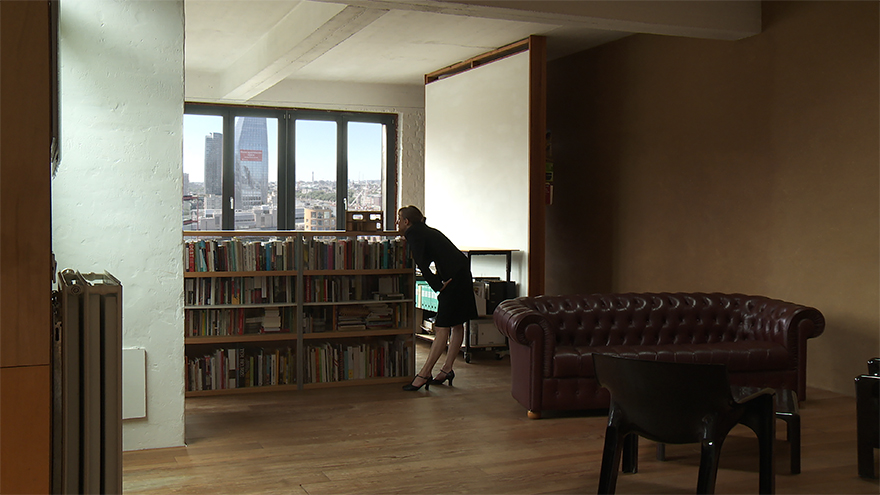
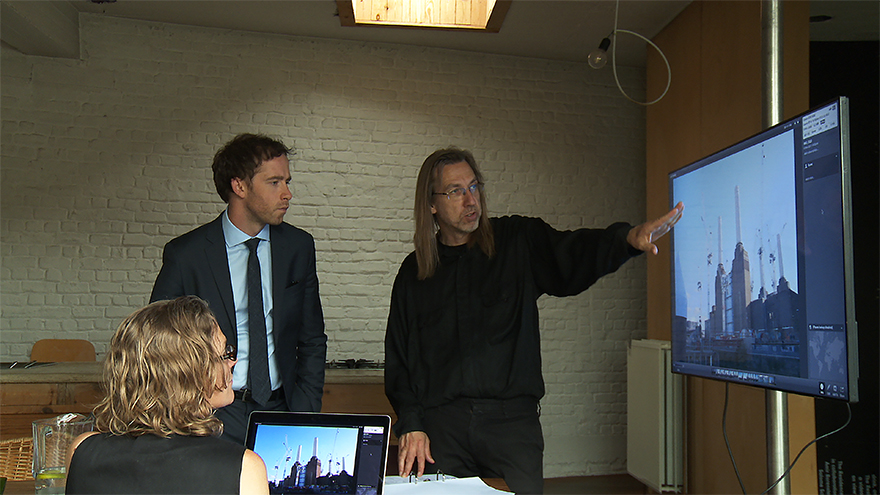
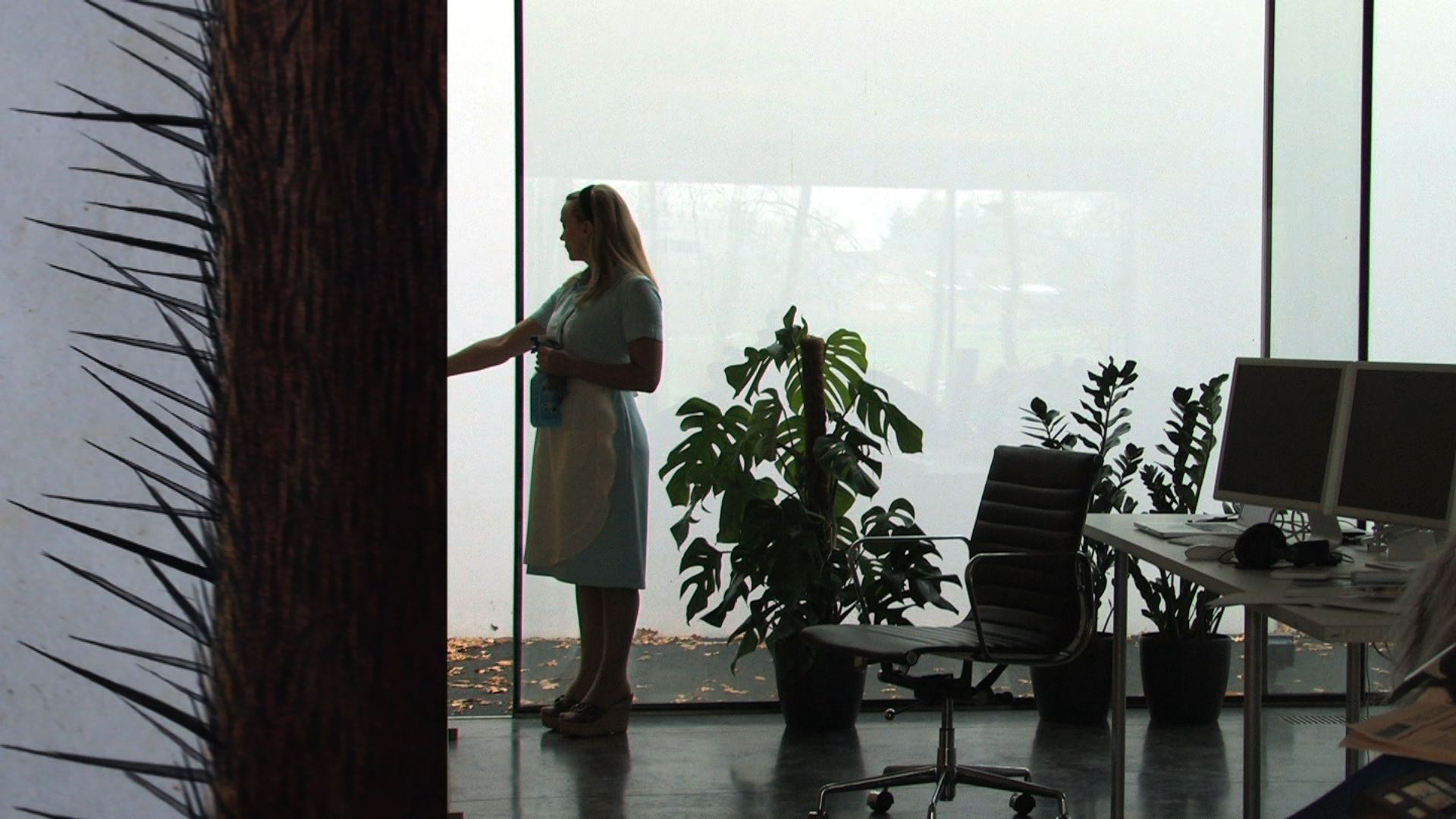
Katleen Vermeir/Ronny Heiremans live and work in Brussels. For over a decade both artists have realized acclaimed projects nationally and internationally. Their work has been presented in Brussels, Istanbul, London, Montreal and New York. The work of Vermeir & Heiremans has a long-standing relationship with architecture. Since 2006 both artists have been developing A.I.R, an ongoing research project that encompasses various collaborations in different formats. Their collaborative project examines domestic architecture as an ideological gesture. At the 10th Istanbul Biennial in 2007 they presented part of their research in a video installation. In 2009 they made their first short film The Good Life (a guided tour), a commission of the Arnolfini Art Center in Bristol.Complete CV Katleen Vermeir; Complete CV Ronny Heiremans; read more on Potential Estate